
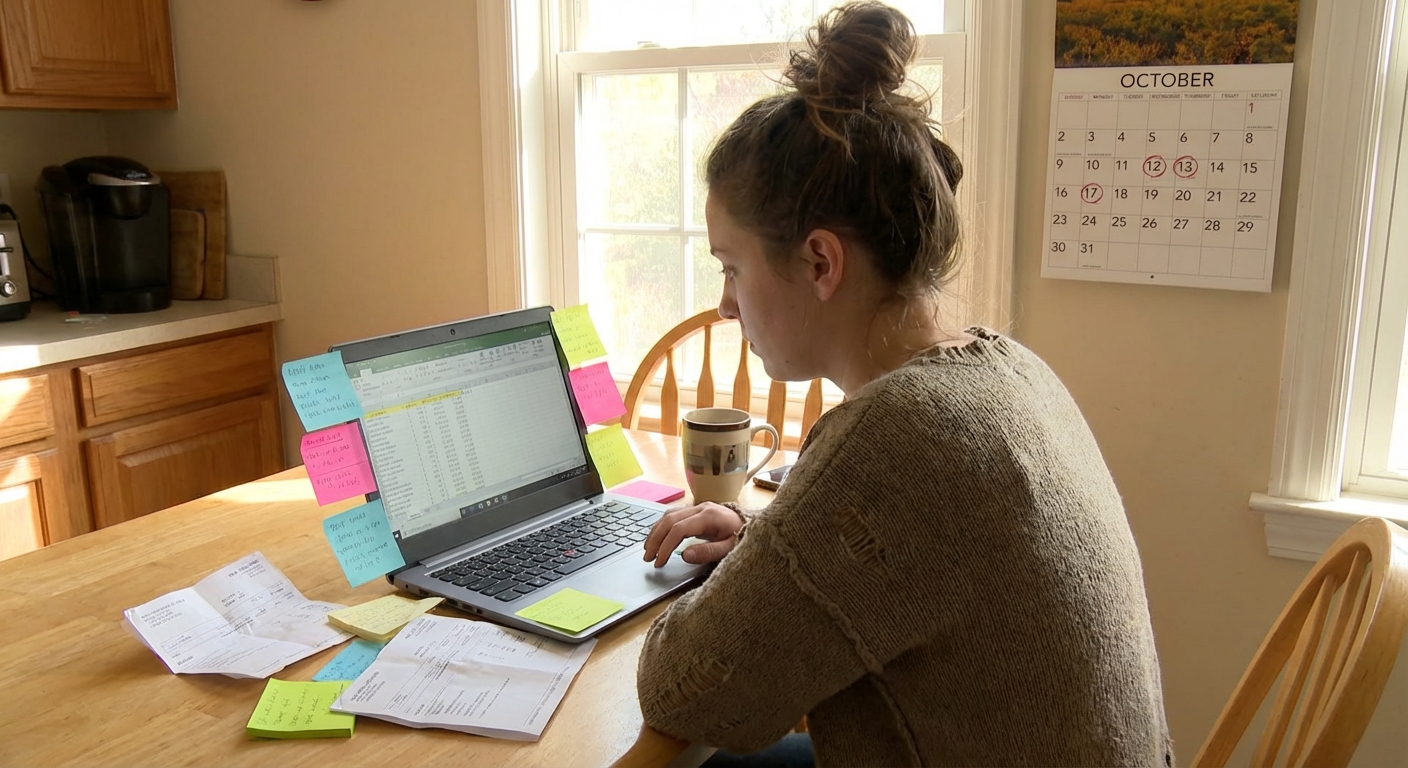
When money is tight, it can feel easier not to look too closely. You pay what you can, hope the card goes through, and tell yourself you’ll get organized “later.”
Why “Winging It” With Money Eventually Stops Working
The problem is, “later” rarely shows up on its own. A simple written budget turns random spending into a plan. It doesn’t have to be perfect or complicated. It just has to be honest.
This guide walks you through building your first real budget from start to finish, using clear steps and realistic examples.
Step 1: List Every Source of Income
Start with what’s predictable enough to plan around.
Include:
- Main job (after taxes)
- Side jobs or freelance work (average of last 3 months)
- Benefits (stipends, child support, etc.)
Example:
- Take-home pay from job: $2,600/month
- Average from weekend shifts: $220/month
Total monthly income = $2,820
If your income is irregular, base your budget on the lowest month you’ve had in the last 3–6 months. That way, your plan is safer.
Step 2: Write Down Your Fixed Expenses First
Fixed expenses are bills that:
- Happen every month
- Are about the same amount each time
These usually include:
- Rent or mortgage
- Car payment
- Insurance
- Phone and internet
- Subscriptions
- Minimum debt payments
Example Fixed Expenses
- Rent: $1,100
- Car payment: $260
- Car insurance: $115
- Phone: $55
- Internet: $60
- Subscriptions (Netflix, Spotify, etc.): $35
- Credit card minimum: $70
- Student loan minimum: $120
Total fixed expenses = $1,815
Now subtract from your income:
$2,820 − $1,815 = $1,005 left
This $1,005 has to cover everything else: food, gas, daily spending, and any savings.
Step 3: Estimate Your Variable Essentials
Variable essentials are things you must pay for, but the amounts change:
- Groceries
- Gas or transportation
- Medical co-pays and medication
- Household supplies (toilet paper, soap, cleaning products)
If you don’t know exact numbers yet, estimate low but realistic, then adjust later.
Example Variable Essentials
- Groceries: $320
- Gas/transportation: $140
- Household supplies: $40
- Medical/health: $40
Total variable essentials = $540
Subtract again:
$1,005 (remaining after fixed bills) − $540 = $465
This $465 is your pool for:
- Fun & lifestyle
- Unexpected small expenses
- Savings and extra debt payments
Step 4: Decide How Much Goes to Fun vs. Future You
You don’t have to choose between enjoying life and being responsible. A good budget makes room for both.
Take your remaining $465 and split it into:
- Fun & Lifestyle (today you)
- Savings/Debt Beyond Minimums (future you)
There’s no magic percentage, but for beginners, a balanced start might be:
- 60% of this leftover money to Fun & Lifestyle
- 40% to Savings/Debt
Example Split
Remaining: $465
- Fun & Lifestyle: 0.60 × 465 ≈ $280
- Savings/Debt: 0.40 × 465 ≈ $185
Fun & Lifestyle Categories
- Eating out/takeout: $140
- Entertainment (movies, events, etc.): $60
- Personal spending (clothes, small treats): $60
- Miscellaneous: $20
Total: $280
Savings/Debt Goals
- Emergency savings: $120
- Extra credit card payment: $65
Total: $185
Now every dollar of your $2,820 has a job. That’s your first complete budget.
Step 5: Choose a Tracking Method You’ll Actually Use
The "best" system is the one you’ll stick with. Here are three options:
1. Paper and Pen
Use a notebook page:
- Write income at the top
- Draw three sections: Fixed, Variable Essentials, Fun & Savings
- List each item with the planned amount and leave space to write actual spending
2. Simple Spreadsheet
Create columns:
- Category
- Planned amount
- Actual amount
- Difference (+/−)
You can total each section at the bottom.
3. Banking App + Notes App
- Use your banking app to see transactions
- Use a notes app to keep a running total for each budget category
For example, under “Eating Out – Budget $140,” you add:
- April 3: $18 (pizza)
- April 6: $9 (coffee)
- April 10: $24 (takeout)
Running total so far: $51 out of $140.
Step 6: Add a Simple “Payday Routine”
Instead of trying to manage a whole month at once, break your budget into pay periods.
On every payday, do the same short routine:
Check your account balances
Pay or schedule bills due before your next payday
Move money to savings (even if it’s $20–$30)
Set a spending limit until the next paycheck
Example: Paid Twice a Month
Monthly income: $2,820 → about $1,410 per paycheck.
Paycheck 1 plan:
- Half rent: $550
- Car payment: $260
- Car insurance: $115
- Groceries (half): $160
- Gas (half): $70
- Eating out (half): $70
- Savings: $60
- Other small items: $125
Paycheck 2 plan:
- Half rent: $550
- Utilities, phone, internet, subscriptions: $260
- Groceries (other half): $160
- Gas (other half): $70
- Eating out (other half): $70
- Extra debt: $65
- Savings: $60
- Other small items: $115
Instead of guessing each week, you know what each paycheck is for.
Step 7: Expect Mistakes (and Plan Around Them)
Your first budget will not be perfect. That doesn’t mean budgets don’t work; it just means you’re learning.
Here’s a simple way to review mistakes without shame:
Notice Overages, Not “Failures”
- Example: You budgeted $140 for eating out but spent $190.
Ask “Why?” Before You Judge
- Were you more stressed or busy and relied on takeout? - Did you forget to budget for a social event?
Make a Tiny Adjustment
- Increase your eating-out budget slightly next month - Or keep it the same but plan one more at-home meal night
Your budget should change with your life, not stay frozen.
Step 8: Build a One-Month Cushion Over Time
Long-term, a great goal is to be one month ahead on expenses. That means:
- The money you earn this month pays next month’s bills
This removes the constant “will this paycheck be enough?” feeling.
You don’t get there overnight. But you can work toward it by:
- Saving a small amount from each paycheck
- Directing tax refunds or bonuses into a “Month Ahead” fund
Once your emergency fund hits about $1,000, you can start adding a bit toward this cushion too.
Quick Checklist: Your First Budget in 30 Minutes
Use this checklist to create your first budget today:
Write down total monthly take-home income
List all fixed bills and total them
Estimate groceries, gas, and variable essentials
Subtract from your income to see what’s left
Decide how to split the remainder between Fun and Savings/Debt
Choose a simple method to track (paper, spreadsheet, notes app)
Plan how you’ll handle each paycheck
You don’t need to be “good with numbers” to be good with money. You just need a simple plan, written down, that you refine a little bit each month. Your future self will be glad you started.