
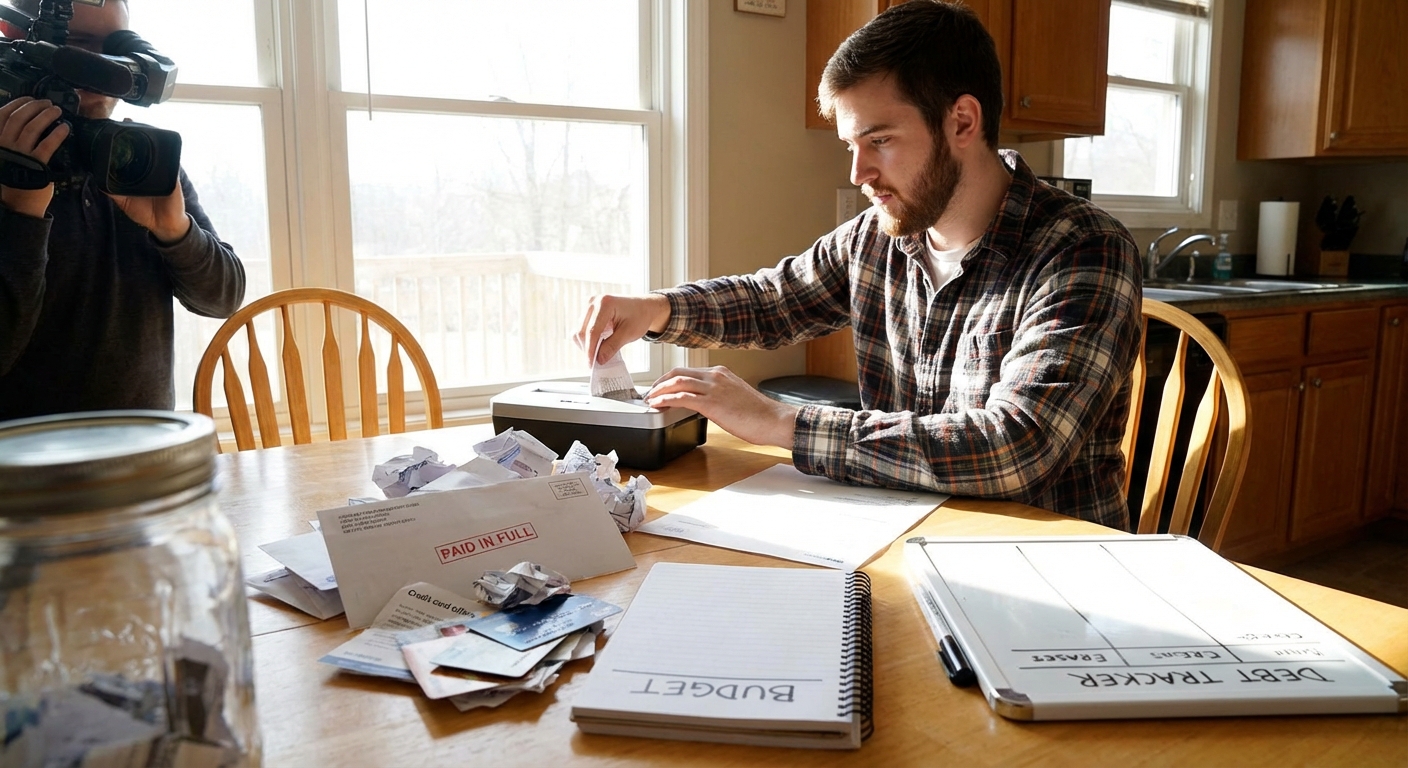
You pay down a credit card, feel relieved, and then a few months later you’re using it again for groceries or car repairs. The balance creeps back up. It can feel like you’re stuck in a loop.
Why Debts Keep Coming Back
Breaking this cycle isn’t just about paying off what you owe—it’s about changing how debt fits into your life going forward.
This guide will help you:
Pay off existing debt with a clear plan
Build simple systems so you don’t have to rely on debt again
No shame, no lectures. Just practical steps.
Step 1: See the Whole Picture (Not Just One Card)
Most people focus on the card that feels most urgent, but to break the cycle you need to understand all your debts.
Create a simple table with:
- Type of debt (credit card, car, personal loan, etc.)
- Balance
- Interest rate
- Minimum payment
- Due date
Example: Sam’s Debts
- Credit Card 1: $2,300 at 23%, $70 minimum
- Credit Card 2: $900 at 19%, $30 minimum
- Store Card: $450 at 25%, $25 minimum
- Car Loan: $10,000 at 6%, $260 minimum
Total debt: $13,650
Minimums: $385 per month
This is Sam’s starting point.
Step 2: Identify Why You’ve Been Using Debt
To stay out of debt, you need to understand: What keeps pulling you back to the card?
Common reasons:
- Not enough savings for emergencies
- Irregular income
- Spending to cope with stress or boredom
- Underestimating non-monthly bills (car repairs, annual fees, school costs)
For Sam, debt tends to grow when:
- The car needs work
- There are big once‑a‑year expenses
- Money gets tight near the end of the month
Write down your top 2–3 triggers. This will shape your plan.
Step 3: Build a Realistic Payoff Plan
You don’t need a complicated spreadsheet. You just need:
A payoff method (Snowball or Avalanche)
A consistent extra payment, even if small
3.1 Choose Snowball or Avalanche
For Sam’s debts:
Balances (for Snowball):
Store Card: $450 (25%)
Credit Card 2: $900 (19%)
Credit Card 1: $2,300 (23%)
Car Loan: $10,000 (6%)
Interest Rates (for Avalanche):
Store Card: 25%
Credit Card 1: 23%
Credit Card 2: 19%
Car Loan: 6%
Sam chooses Debt Avalanche because high interest card balances are causing the most stress. You can choose either—what matters is that you stick with it.
3.2 Find Your Extra Payment
Sam’s monthly take‑home income: $3,000
Essential expenses:
- Rent: $1,200
- Utilities: $180
- Groceries: $350
- Transportation (gas, etc.): $160
- Phone & Internet: $130
- Insurance: $150
- Debt minimums: $385
Total essentials: $2,555
Money left: $3,000 − $2,555 = $445
Right now that $445 goes to eating out, small purchases, and entertainment. Sam decides to free up $175 for extra debt payments.
New total going to debt: $385 + $175 = $560 per month.
3.3 Apply the Extra
Using the Debt Avalanche, Sam starts with the Store Card (25%):
- Store Card: $25 minimum + $175 extra = $200/month
- All other debts: pay minimums
Once the Store Card is paid off, that $200 rolls into the next highest interest card.
Step 4: Create a Starter Emergency Fund (So Debt Isn’t Plan A)
If you don’t have at least $300–$1,000 in savings, every unexpected bill becomes a debt problem.
While paying off debt, aim for a small emergency fund first.
You can choose one of these approaches:
Fund-first approach:
- Pause extra debt payments for 1–3 months - Build up $300–$500 in savings - Then start sending extra to debt
Split approach (like Sam):
- For 4 months, split the $175 like this: - $100 extra to debt - $75 to emergency savings
After 4 months, Sam will have about $300 in savings plus some progress on the Store Card.
This small buffer helps stop the cycle of putting every unexpected cost on a card.
Step 5: Deal With Irregular and “Sneaky” Expenses
A big reason debt comes back is that we forget about expenses that aren’t monthly.
Examples:
- Car registration
- Annual memberships
- School fees
- Holiday gifts
- Insurance premiums (if paid yearly)
Make a list of any non-monthly expenses and estimate the yearly total.
Example for Sam:
- Car registration: $180/year
- Gifts & holidays: $600/year
- Annual subscription: $120/year
Yearly total: $900
Divide by 12: $900 ÷ 12 = $75/month
Sam creates a “sinking fund”, a small monthly saving specifically for these non-monthly costs:
- $75/month goes to a separate savings sub-account
When those bills arrive, Sam pays cash instead of reaching for a credit card.
Step 6: Set Guardrails Around Your Credit Cards
You don’t have to cancel your cards to break the cycle, but you may need new rules.
Options:
Emergency-only rule:
- Keep one card for true emergencies (car tow, medical copay if you have no cash) - Store it out of sight (drawer, safe, or even frozen in a container of ice)
Low-limit daily card:
- Use one card strictly for a budgeted category (like gas) - Pay that card off in full every month
No active use temporarily:
- Stop using all cards while you build new habits
Pick a rule that feels challenging but realistic. Write it down. For example:
“For the next 6 months, I will not use any credit card for eating out, shopping, or travel. If I don’t have cash, I won’t buy it this month.”
Step 7: Automate What You Can
Automation reduces missed payments and temptation.
Set up:
Automatic minimum payments on all debts (at least a few days before due dates)
Automatic transfers to:
- Your emergency fund (even $20–$50 per paycheck) - Your sinking fund for irregular expenses
If your bank allows it, automatic extra payment to your current target debt
This way, your plan happens by default, and you only have to make adjustments—not decisions—from scratch every month.
Step 8: Monitor Your Progress Each Month
Once a month (not every day), check:
- Current balances on each debt
- Total debt compared to last month
- Emergency fund balance
Sam tracks:
- Month 1 debt total: $13,650
- Month 3 debt total: $12,900
- Month 6 debt total: $11,700
Seeing that number slowly drop helps reinforce the new habits.
You can use:
- A simple notebook
- A notes app on your phone
- A basic spreadsheet
No fancy tools required.
Step 9: Plan for After a Debt Is Paid Off
One of the biggest traps is this:
- You pay off a card
- You feel rich because you freed up money
- That freed-up money disappears into random spending
To break the cycle, plan ahead where that money goes.
For Sam, once the Store Card’s $200/month is freed:
- $150 will roll to the next target debt
- $50 will boost the emergency fund until it reaches $1,000
Write your own rule:
“Whenever I pay off a debt, I will send at least 80% of that freed-up payment to my next debt or savings goal.”
This keeps your progress growing like a snowball.
Step 10: Redefine What “Emergency” Means
A big part of staying out of debt is protecting your emergency fund for true needs.
Emergencies are:
- Car won’t start and you need it for work
- Unexpected medical issue
- Necessary home repair (like a leaking pipe)
Emergencies are not:
- Concert tickets
- Sales on clothes
- Takeout after a long day (that’s normal life, not an emergency)
You’re allowed to enjoy life—just build those things into your regular budget, not your emergency fund.
Putting It All Together
Breaking the debt cycle means combining payoff actions with protection systems.
Your checklist:
List all debts with balances, interest, and minimums
Identify your top 2–3 reasons you’ve used debt
Choose snowball or avalanche and a realistic extra payment
Build a starter emergency fund ($300–$1,000)
Create a sinking fund for non-monthly expenses
Set personal rules for credit card use
Automate minimums, savings, and extra payments
Track progress monthly, not obsessively
Plan what happens with each freed-up payment
Protect your emergency fund for real emergencies
You don’t need to be perfect to break the cycle. You just need to keep moving in a better direction and protect the progress you make.
Every payment you send and every dollar you save is proof that your future with money can look different from your past.