
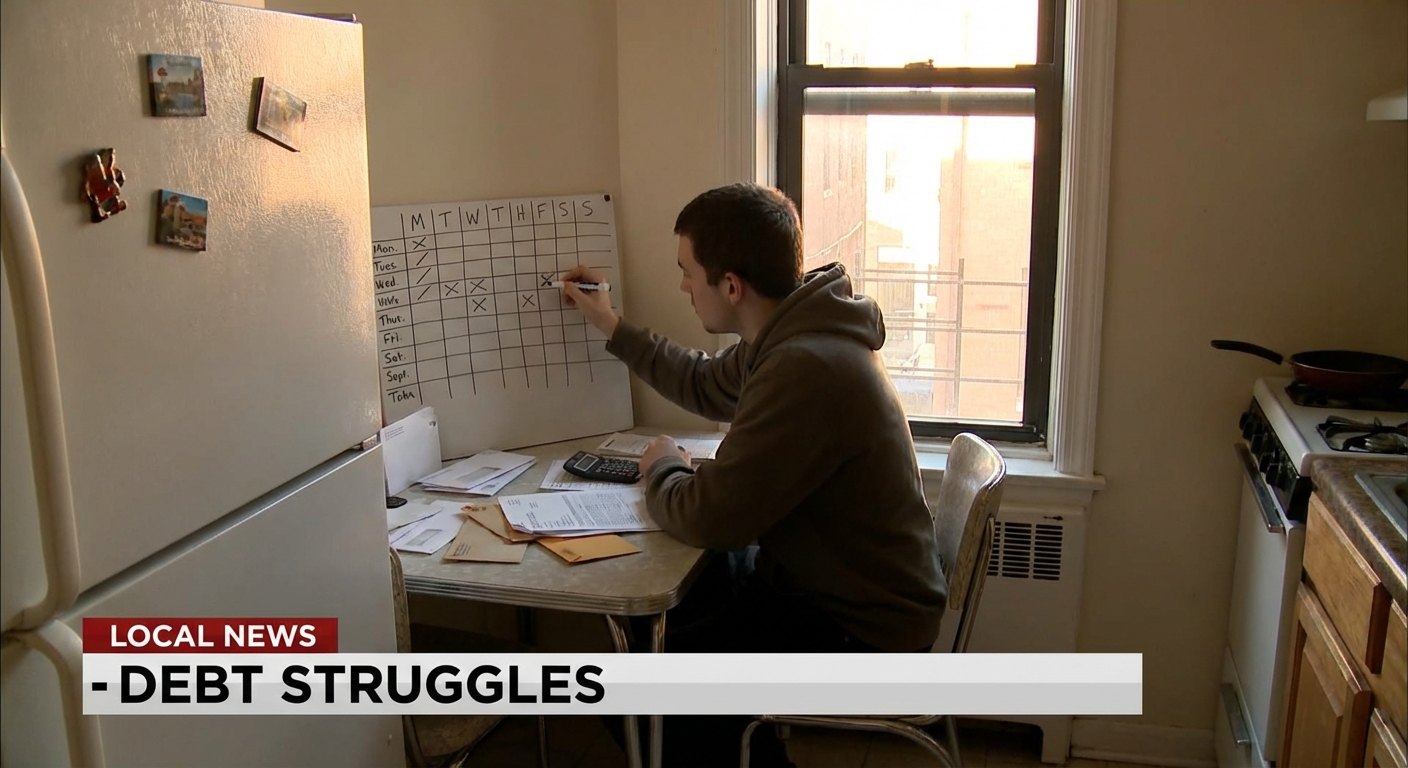
If your income feels small, you might think debt payoff is only possible for people who “make more money than you.” It’s understandable to feel that way—but it’s not the full story.
Yes, You Can Pay Off Debt on a Low Income
You can make real progress on debt with a modest paycheck. It might be slower, and that’s okay. The key is building a plan that respects your real numbers, instead of pretending you can afford big payments you can’t sustain.
This guide focuses specifically on low to moderate income situations, with realistic examples and small steps.
Step 1: Know Your True Take-Home Pay
Don’t use your “salary” or hourly rate in your head. Use the money that actually lands in your bank account.
Example: Jordan works hourly and paychecks vary.
- Average take‑home last 3 months: $1,950 per month
Write down your average monthly income based on the last 2–3 months.
If your income swings a lot, use a conservative estimate (a lower number you’re confident you’ll hit most months).
Step 2: Cover the Essentials First
Debt payoff comes after your basic needs are met. Essentials include:
- Housing (rent, utilities)
- Basic food (groceries, not takeout)
- Transportation to work (gas, bus pass, basic car costs)
- Insurance (car, basic health if applicable)
- Minimum payments on debts
Jordan’s monthly essentials:
- Rent: $750
- Utilities: $120
- Groceries: $260
- Transportation: $140
- Phone & Internet: $90
- Insurance: $90
- Debt minimums: $280
Total essentials: $1,730
Income $1,950 − Essentials $1,730 = $220 left for everything else.
This $220 currently covers:
- Eating out
- Clothes & random shopping
- Subscriptions
- Small treats
This is also the pool of money we’ll use to build extra debt payments.
Step 3: List Your Debts (Even If It’s Scary)
Jordan’s debts:
- Credit Card A: $1,200 at 24% interest, $35 minimum
- Credit Card B: $2,800 at 20% interest, $70 minimum
- Medical Bill: $600, 0% interest (payment plan $50/month)
- Personal Loan: $3,500 at 9% interest, $125 minimum
Total debt: $8,100 and total minimums: $280
Seeing it all can hurt, but knowledge is power. You can’t improve what you don’t measure.
Step 4: Find a Realistic Extra Payment (Even If It’s Small)
With $220 left after essentials, you can’t put all of it toward debt—you’d have nothing left for small life joys, which isn’t sustainable.
Instead, aim for a small but consistent extra payment.
Look at current non-essential spending:
- Takeout & coffee: $120
- Subscriptions: $40
- Misc. shopping: $60
Total: $220
Possible adjustments:
- Takeout & coffee: $120 → $70 (save $50)
- Subscriptions: $40 → $20 (save $20)
- Misc. shopping: $60 → $30 (save $30)
That frees up $100 per month for extra debt payments.
You still keep:
- $70/month for eating out
- $20 subscriptions
- $30 for small purchases
This matters: taking away everything fun usually backfires.
If your budget is even tighter, your extra might be $20–$50. That’s still progress.
Step 5: Choose a Simple Focus Debt
On a tight income, overwhelm is the enemy. Instead of trying to crush everything at once, pick one target debt.
For Jordan, there are two good approaches:
- Debt Snowball (motivation): Start with the smallest balance (Medical Bill $600)
- Debt Avalanche (interest): Start with the highest interest (Credit Card A at 24%)
On a low income, early wins can matter a lot emotionally. Jordan chooses Snowball to knock out the $600 medical bill first.
Step 6: Build a Tiny Emergency Cushion
If you have zero savings, everything—from a flat tire to a copay—goes on a card and adds to your stress.
Try this for the first 2–3 months:
- Split the extra $100: $60 to debt, $40 to savings
After 3 months:
- You’ve put about $180 toward extra debt
- You’ve built $120 in emergency savings
Once you hit around $300–$500 in savings, you can send more of that $100 toward debt.
Step 7: Jordan’s Realistic Payoff Plan
Jordan’s monthly payments:
- Minimums on all debts: $280
- Extra: $60 (for now)
Total to debt: $340 per month
Target 1: Medical Bill ($600 at 0%)
Medical Bill payment: $50 minimum + $60 extra = $110/month
Approximate timeline:
- Month 1: $600 → $490
- Month 2: $490 → $380
- Month 3: $380 → $270
- Month 4: $270 → $160
- Month 5: $160 → $50
- Month 6: Pay off
In about 6 months, Jordan clears the first debt on a tight income. That’s huge.
Then, that $110 rolls to the next target.
Target 2: Credit Card A ($1,200 at 24%)
New payment after Medical Bill is gone:
- Credit Card A: $35 minimum + $110 freed + $60 extra (if still available) = about $205/month
That card may be gone in roughly 6–7 months, depending on interest.
Is this fast? No.
Is it progress? Absolutely.
Step 8: Use Irregular Money Wisely
On a low income, windfalls matter. These include:
- Tax refunds
- Bonuses
- Cash gifts
- Large tips or extra shifts
Decide ahead of time how you’ll use them:
- 50% to debt
- 30% to emergency savings
- 20% for something that brings you joy
This keeps you moving forward and helps you feel the benefit now.
Example: Jordan gets a $600 tax refund.
- $300 to current target debt
- $180 to emergency savings
- $120 for something fun (trip to see family, new shoes, etc.)
Step 9: Talk to Your Lenders When You’re Struggling
If minimum payments feel impossible, don’t wait until you’ve missed several.
You can:
- Call credit card companies and ask about hardship programs
- Ask if they offer temporarily reduced payments or lower interest rates
- Check if your medical provider has income-based payment plans
Be honest:
“I want to pay, but my income is limited. What options do you have for people in financial hardship?”
Taking this step is not failure. It’s taking control.
Step 10: Protect Your Mental Health Along the Way
Debt + low income is emotionally heavy. You might feel stuck, embarrassed, or anxious. Those feelings are common—and you’re not alone.
A few small practices can help:
- Track one positive thing each month: total debt going down, emergency savings going up, or a bill you paid on time
- Limit comparison: your situation is unique; other people’s income or timeline doesn’t define your progress
- Use supportive language with yourself: replace “I’m terrible with money” with “I’m learning new money skills”
When You Truly Can’t Pay All Minimums
If, after listing your essentials, you cannot afford all minimums, this is a sign to seek more support.
Possible steps:
- Prioritize essentials first (housing, food, basic transportation).
- Make at least small payments to each debt if you can, to show effort.
- Talk to a non-profit credit counseling agency (make sure it’s legitimate and not a for-profit debt settlement company).
- Ask about options like debt management plans, where they negotiate lower rates and you make one combined payment.
You are not failing by asking for help. You’re doing what responsible people do in hard situations.
Progress on a Small Paycheck Still Counts
If all you can afford is:
- $25 extra a month
- Or an extra $10–$15 every time you get paid
…it still makes a difference.
Over 3 years, $25/month is $900 you’ve thrown at your debt beyond minimums. Combined with any windfalls or raises, that momentum grows.
You don’t have to be high-income to be intentional.
All you need to do is:
Know your real numbers
Protect essentials first
Find a realistic, small extra payment
Focus on one debt at a time
Use windfalls and raises to boost your plan
Your pace might be slower than someone else’s—but it’s still forward. And every dollar you send to debt is you taking back a little more control.